
Conversions: Follow the Paths Behind Your Pipeline
A ghosted qualification call doesn’t tell you whether the opportunity is over. What happened next? Did the rep follow up? Did the prospect reply, return to a productive conversation, or disappear?
QFlow brings activity, campaign, and opportunity records into that investigation. Build the analysis around the part of the selling process you want to understand, then examine the evidence before changing it.
Custom conversion flows
For a new flow, choose whether to follow people, companies, or opportunities, and define the sequence that counts as progress. Use campaign responses, calls, meetings, opportunity changes, and the custom events your team has set up.
You can examine a specific handoff, such as a booked meeting becoming a completed one, or follow webinar participants through to a qualified opportunity. Build the flow around the question your team needs to answer.
This fall adds custom Salesforce event sources, a choice of strict sequence or general order, evidence tied to the metric you select, and comparisons that account for how long each cohort has had to convert.
Paths and re-entry
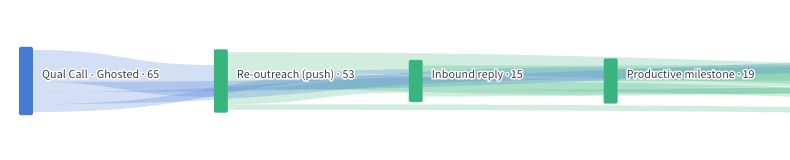
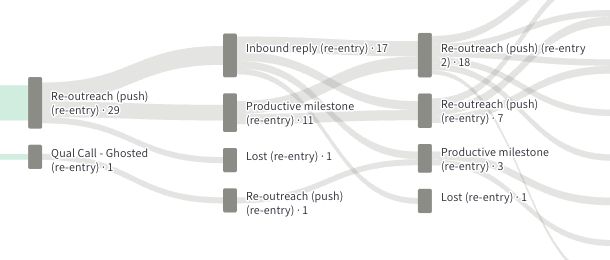
The saved ghosted-call analysis below brings re-outreach, inbound replies, productive milestones, and opportunity outcomes into the same investigation. Its paths retain repeated and out-of-order steps, showing where an opportunity returns to an earlier part of the journey.
Sales can investigate where follow-up stops, which conversations resume, and where the next handoff breaks down. A missed call becomes a starting point for understanding what happened next.
Source evidence
Open the records behind the metric before changing budget or follow-up. Who reached the step? Who progressed? What activity occurred between those points?
This is where a pattern becomes something the team can investigate. A follow-up preceding a win is useful evidence, but it doesn’t establish that the follow-up caused the win.
Comparisons over time
Once the journey is defined, compare programs, selling motions, and periods. Check how many entered, how many progressed, and how long it took. Recent prospects need time: last quarter’s attendees may have had three months to become opportunities; this month’s may have had a week. Keep prospects who are still within the conversion window visible when comparing results.
Saved analyses and MCP
Save the definition for subsequent reviews and follow-up questions. Through MCP, Claude or Codex can retrieve the saved-flow results and supporting opportunity records. Your team can investigate the journey, compare results, and work through the next question without rebuilding the analysis.
Keep the evidence attached to the decision: where to improve follow-up, which handoff needs attention, and which programs deserve more investment.