
Multi-entity Support Is Publicly Available
Multi-entity support is publicly available.
Large, acquisitive organizations often have no medium- or long-term plan to consolidate their CRMs. That can be a sensible choice. A services business and a subscription software company may have different customers, sales processes, and ways of earning revenue. Putting them in the same system won’t necessarily make either business easier to run.
Their teams still need to plan and forecast. Management still needs to understand the group. QFlow lets you plan and analyze those businesses together while each continues using its own CRMs, ERPs, and GTM tools.
Revenue Models
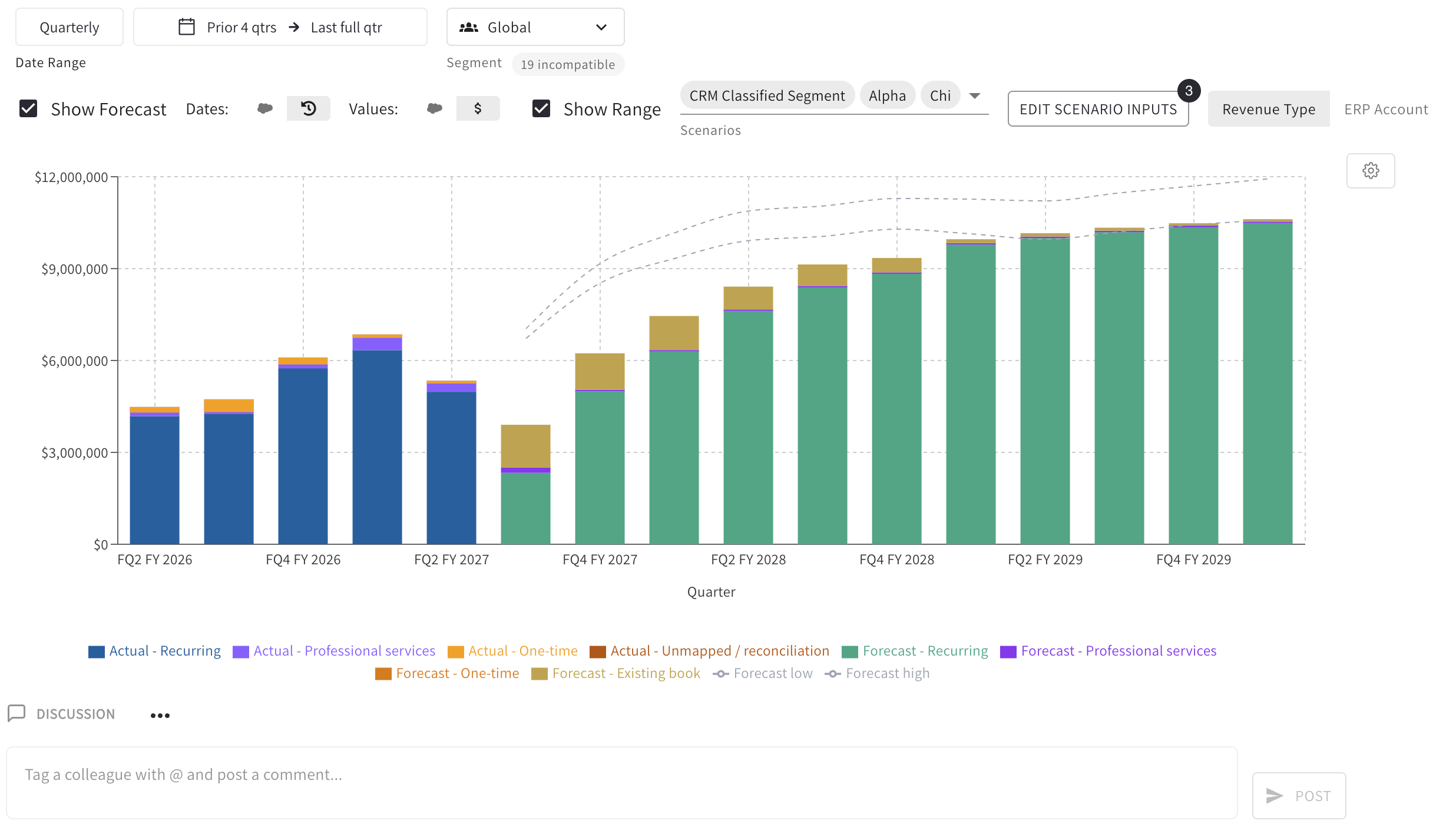
Different businesses need forecasts that reflect how they earn revenue. QFlow supports recurring subscriptions, usage and consumption, per-unit pricing, professional services, and one-time or hardware revenue.
A business can combine several of these streams, each with its own assumptions and timing. Subscription revenue may be recognized throughout a contract, implementation fees over a delivery period, and usage revenue as customers consume the product. With sufficient linked invoice history, forecasts can use historical patterns to reflect seasonal timing.
Each business can plan using the models that fit it, then contribute its projection to the group.
Data Hygiene and Planning
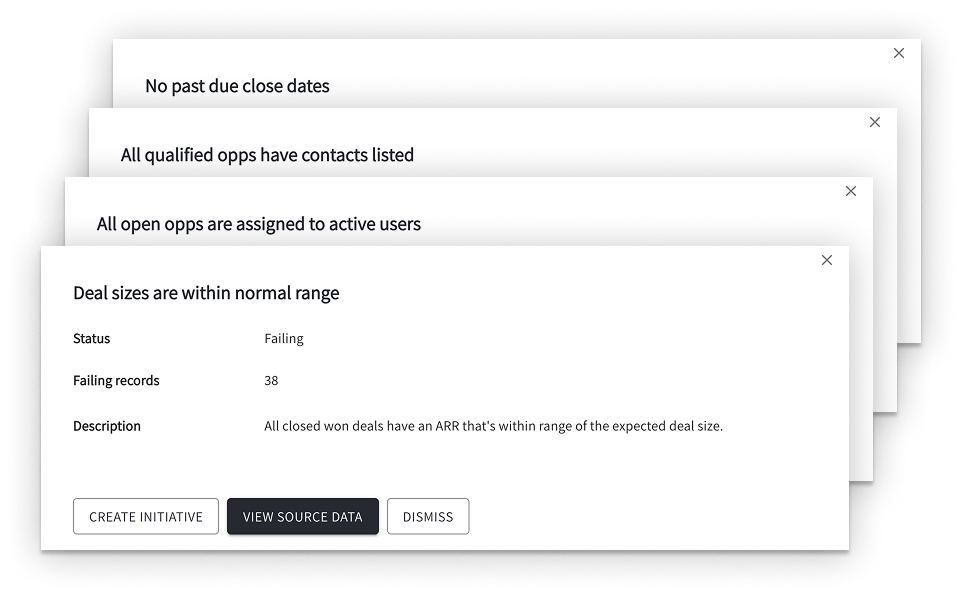
QFlow makes complex, messy data easier to understand and act on, entity by entity. Teams can investigate unreliable pipeline, address hygiene issues, and review the assumptions behind their forecasts.
An overdue close date or an implausible deal size needs attention in the business where it originated. The local team can inspect the underlying records and decide what needs correcting. Management gets a firmer basis for planning, with less time spent reconciling separate exports.
Business Digests and Group Rollups
Management can browse Business Digests by business unit to understand performance and where attention is needed. Roll up ARR waterfalls, booking forecasts, revenue projections, and other supported analyses across connected businesses. Use the Revenue breakdown to see what each business contributes.
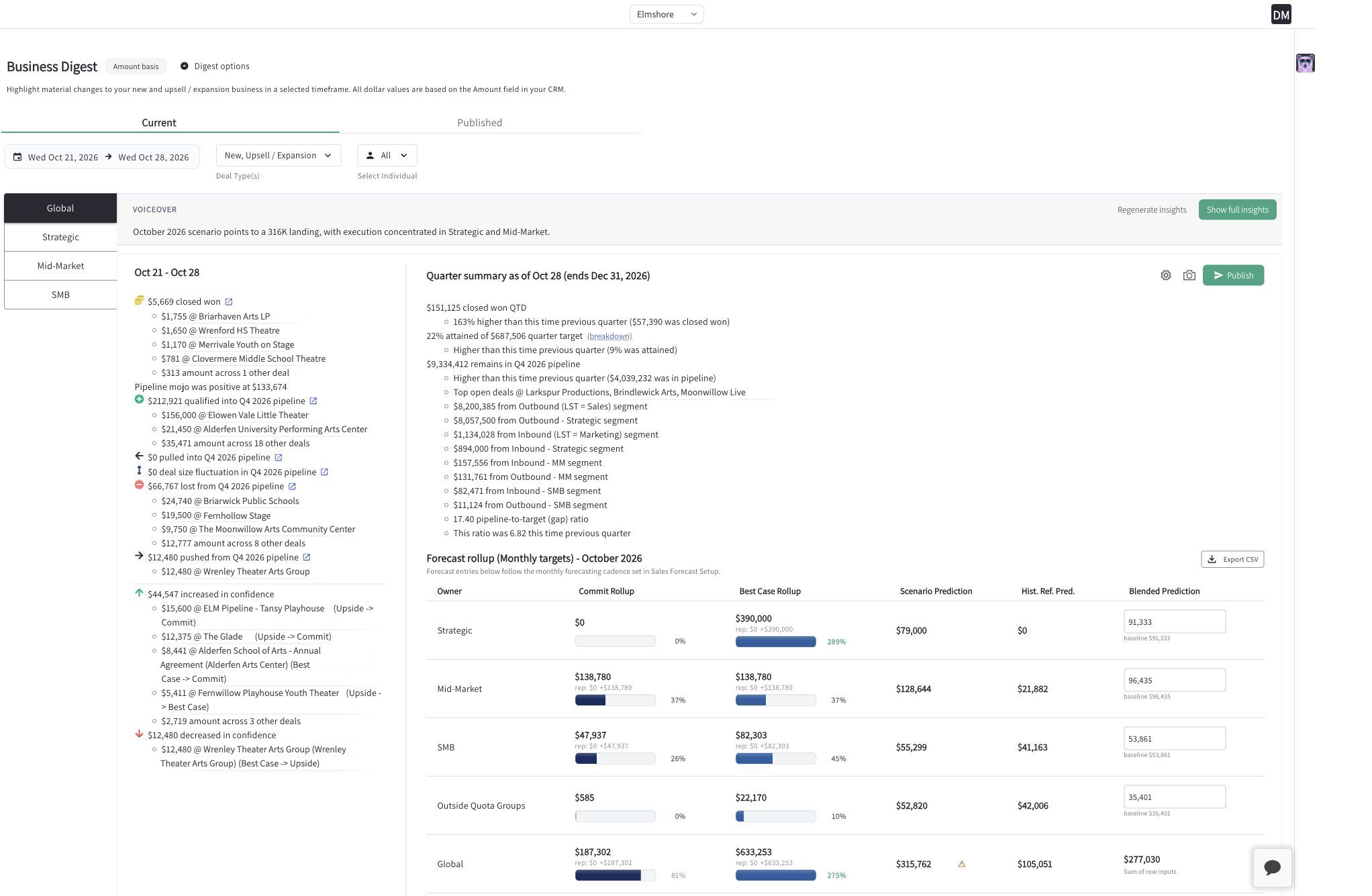
Suppose the group is behind plan. Start with the rollup to identify the business driving the gap. Open its Digest, then follow the issue into the underlying analysis. Is a renewal missing? Has pipeline weakened? Does a revenue assumption need to change?
Now the operating discussion has a specific issue, in a specific business, and evidence for deciding what to do next.
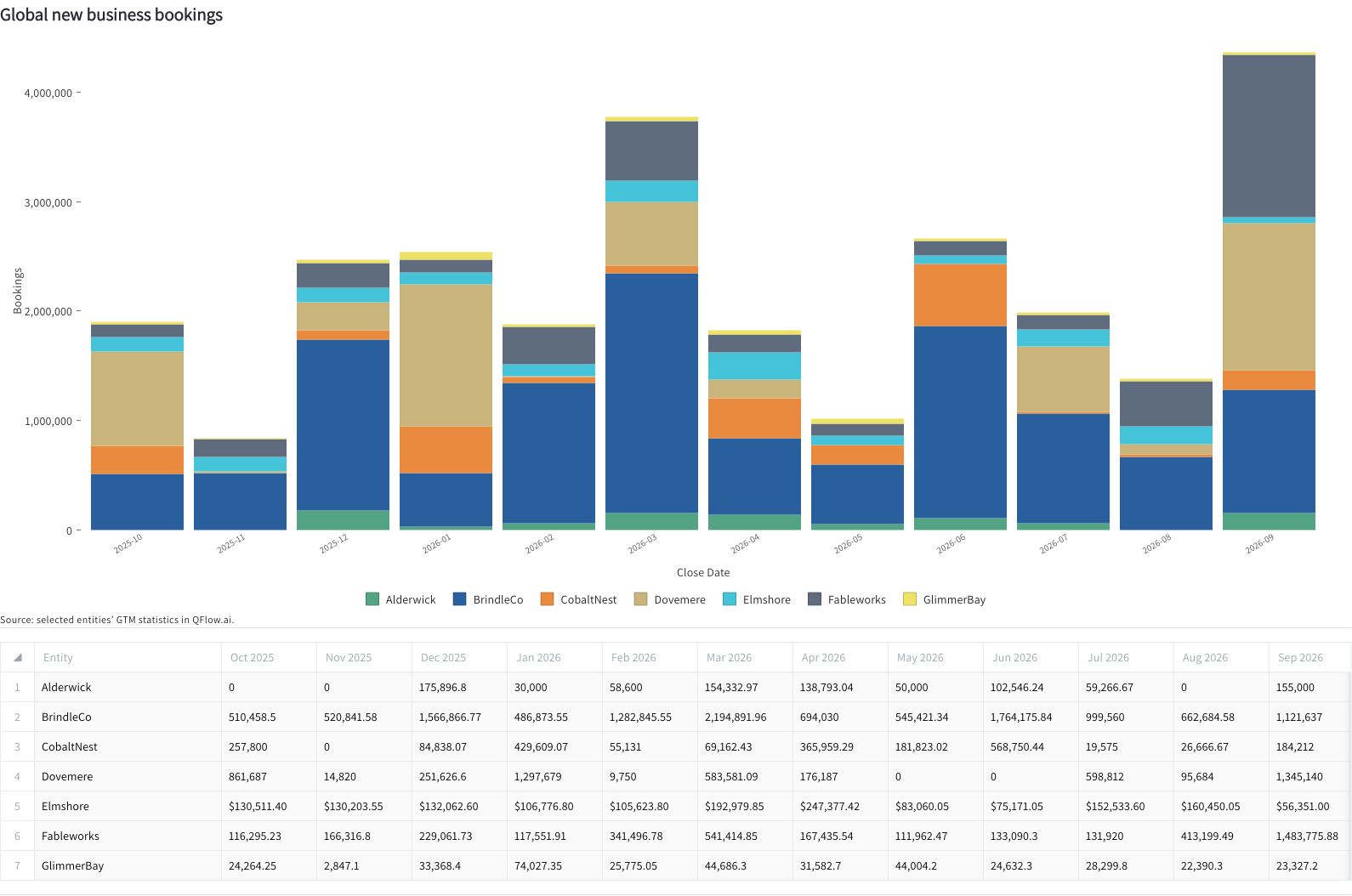
Supported datasets and exports carry that work into follow-up analysis and board preparation. Revenue data is also available through MCP for use in Claude or Codex.
If you’re managing several businesses, we’d be happy to show you QFlow working across the systems you already have. CRM consolidation can remain a separate decision.