
Measure Sales Ramp Before the First Win
Most sales leaders measure ramp from the first closed-won deal. Revenue is the outcome, so the instinct makes sense. But the first win arrives late. It varies with deal cycle, territory, and timing. It can also come from an opportunity the rep inherited.
By the time closed-won becomes a reliable signal, several coaching cycles are gone.
Closed-won confirms ramp. It does not show how a rep got there.
QFlow’s Sales Ramp Agent makes the earlier signals visible. It follows pipeline creation, conversion, and the work between stages, then compares those signals across reps at the same point in their tenure. Leaders can see whether a motion is forming before revenue lands.
Compare month one with month one
Calendar reports distort ramp. A rep in month one should not be compared with a rep in month six simply because both appear in the same quarter.
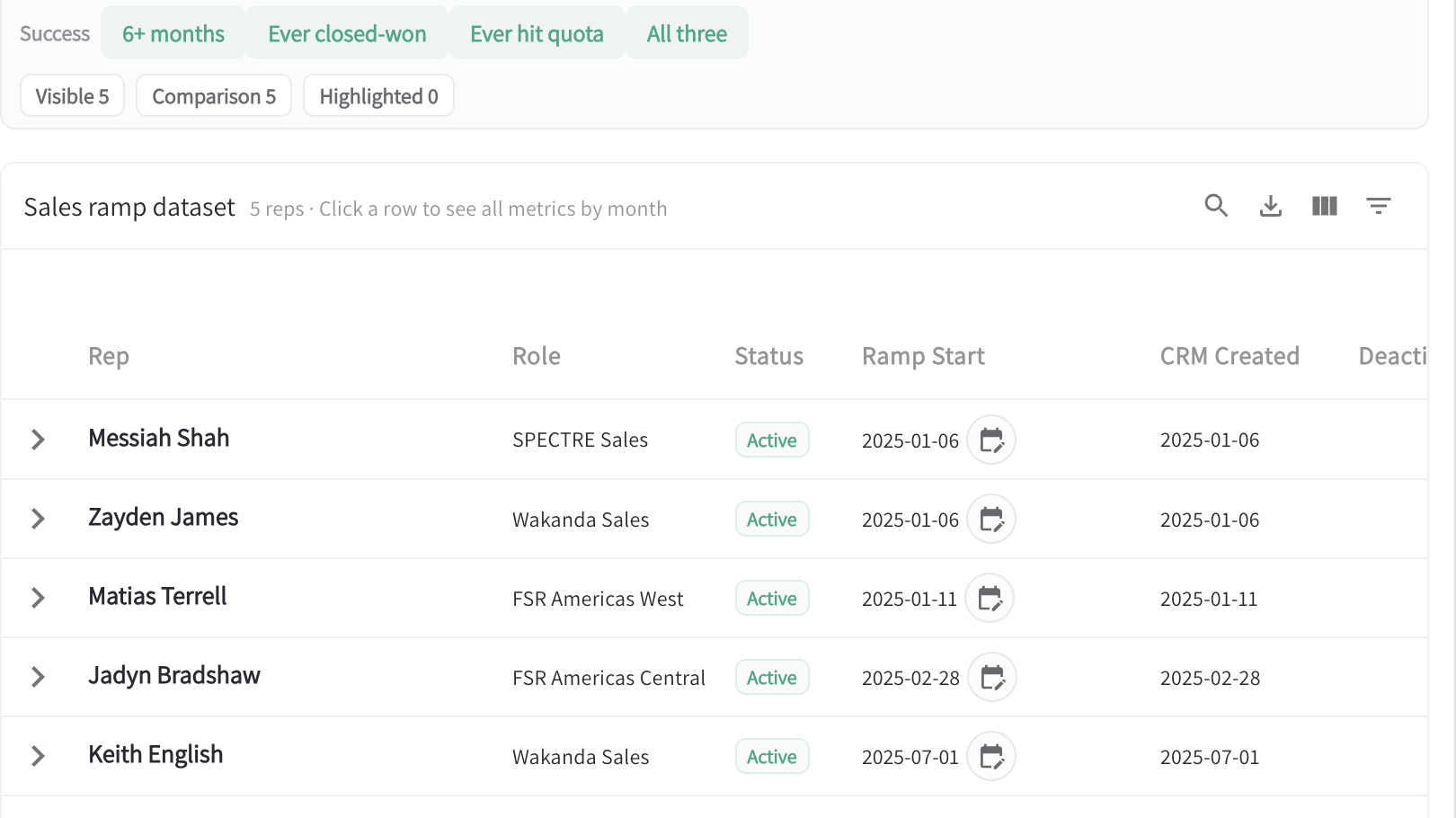
QFlow’s Sales Ramp Agent aligns each rep to a ramp start date and measures the motion by month of tenure. RevOps can define the successful cohort using outcomes such as closed-won or quota attainment, then work backward to see what those reps did earlier. The useful comparison is not new reps against the whole team. It is month one against month one, month two against month two.
That normalization reveals which reps are ahead and which behaviors distinguish them. It also gives leaders a real benchmark: not an abstract activity target, but the path already taken by successful peers in the same role and segment.
Ownership is not pipeline creation
The number of opportunities in a rep’s name is a weak ramp signal on its own. Some were inherited. Some were assigned after qualification. Others began with the rep and an SDR working the account together.
Those paths are not equivalent. Ten inherited opportunities can make a new rep look productive before their own motion works. Ten opportunities the rep helped generate show something else: account selection, prospecting, collaboration, and conversion are beginning to compound.
QFlow’s Sales Ramp Agent separates opportunity ownership from opportunity creation. Sales leaders can see whether pipeline was inherited, generated by the rep, or created with SDR support. That distinction keeps a favorable territory or handoff from masquerading as ramp, and it gives credit to the work that actually creates new pipeline.
Find the conversion point that separates the cohort
Activity totals do not explain performance. The important question is what happens between conversion points.
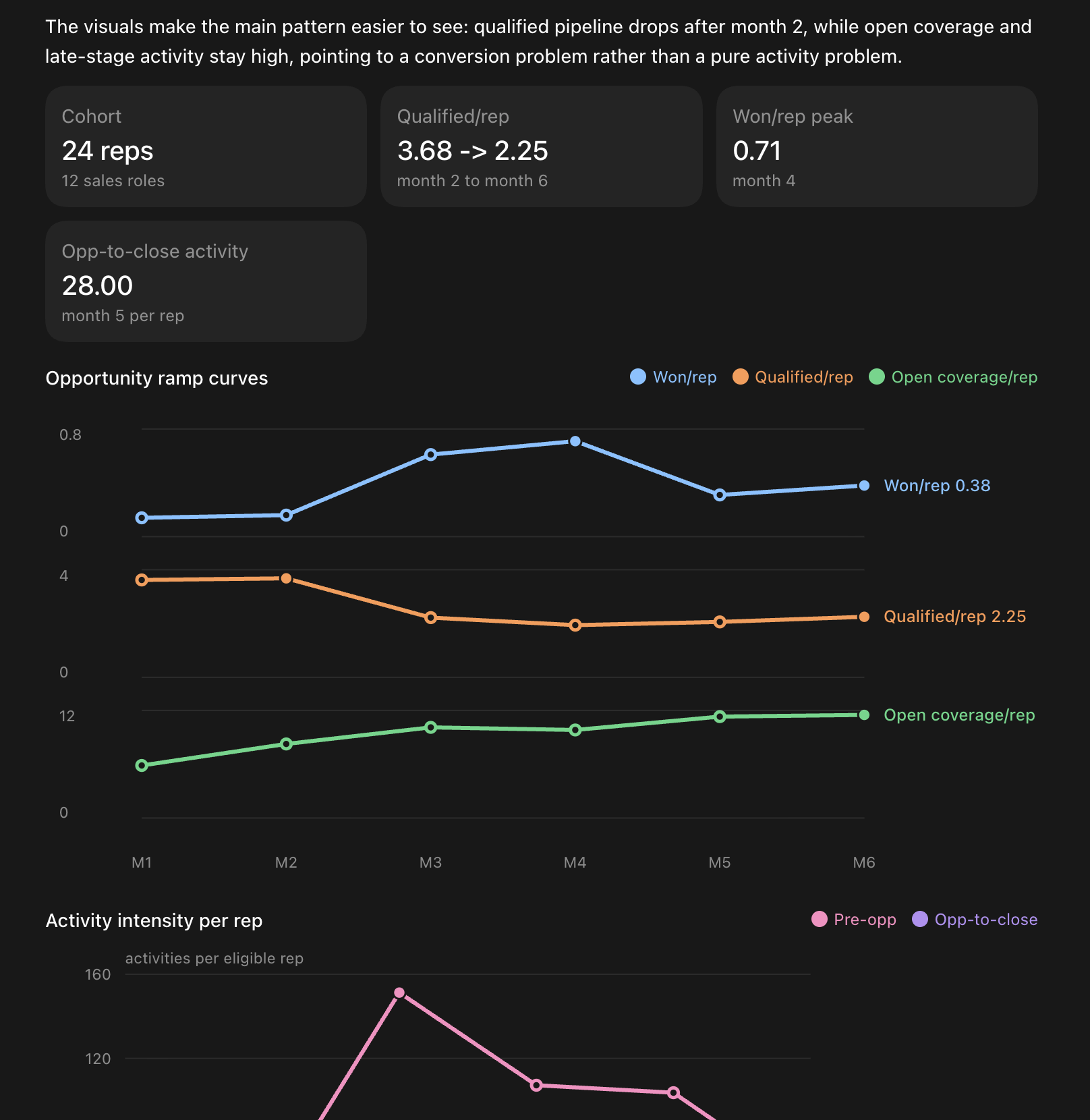
In the analysis above, qualified pipeline per rep falls from 3.68 in month two to 2.25 in month six while open coverage and later-stage activity remain high. That pattern points to conversion, not a lack of effort. More calls would be a reflex. Inspecting how accounts become qualified pipeline is a diagnosis.
QFlow’s Sales Ramp Agent connects the activity before an opportunity, the work that advances it, and the outcomes that follow. It reads the dataset and states the pattern plainly, so a CRO can enter the next meeting knowing where the ramp curve bends and which reps or cohorts deserve a closer look.
The first win still matters. It tells you the rep got there. The upstream signals tell you whether the next rep is getting there, while there is still time to coach the motion, adjust coverage, or fix a broken conversion point.