
Introducing QFlow Organization Skills: From Deterministic Results to Finished Work
The analysis can be exact and the final deliverable can still depend on memory.
An analyst opens last month’s deck, replaces charts, adjusts the commentary, fixes the appendix, and hopes every formatting decision survived the copy. The numbers may come from a governed process. The finished work does not.
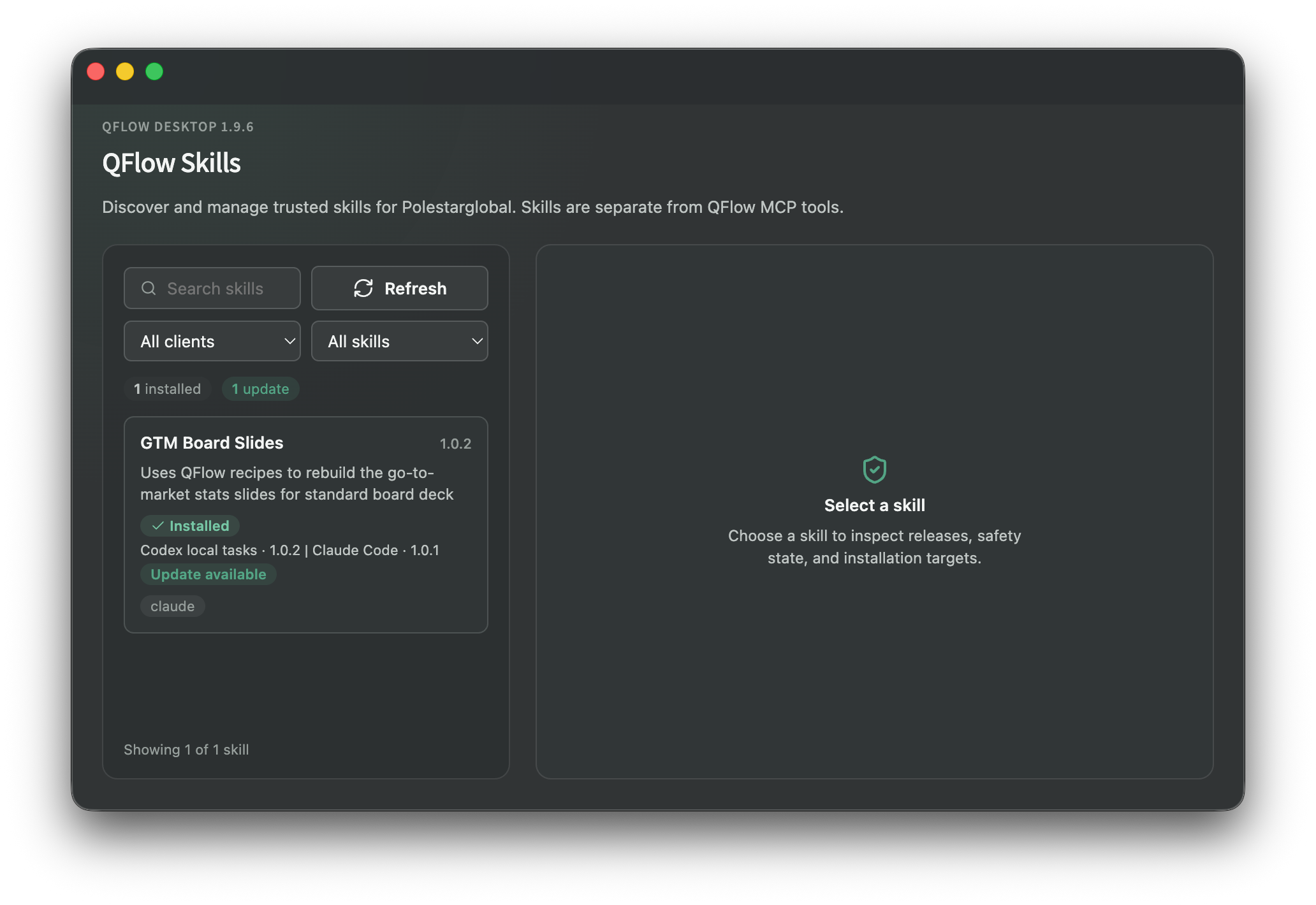
Today we are introducing QFlow Organization Skills: private, versioned workflow packages that teach Codex and Claude how your company turns QFlow results into decks, workbooks, reports, and forecasts.
Recipes own the result. Skills own the delivery.
A QFlow Agentic Recipe runs the approved analysis. It applies the same definitions, filters, transformations, and calculations to fresh data each time.
An Organization Skill defines what happens next. It can package instructions, templates, reference material, and optional scripts for recurring work. It tells the AI assistant which structure to follow, how to format the output, what evidence to include, and where human judgment is required.
The distinction matters. A Recipe can return the right pipeline movement, forecast, win-loss, P&L variance, or expense analysis. A skill can place that result into the company’s board template, apply the expected chart and narrative conventions, assemble the supporting schedules, and preserve the review steps.
The math does not move into the prompt. The presentation logic does not remain trapped in one analyst’s head.
A board package that runs again
Consider a monthly board package. QFlow Recipes produce current pipeline, forecast, bookings, conversion, and win-loss analysis. The Organization Skill carries the approved deck template, slide order, chart conventions, executive-summary guidance, source-note requirements, and assembly instructions.
QFlow Desktop syncs the verified Recipe outputs and makes the published skill available to Codex or Claude. The assistant builds the file in its own working environment. An analyst reviews the numbers, narrative, and judgment calls before anything is shared.
Next month, the team runs the same workflow with fresh Recipe results and the same published skill. The work is repeatable without pretending that executive communication is fully automatic.
The same pattern applies to investor requests, operating reviews, recurring forecast workbooks, narrated reporting, and complex analyses that need to retain their definitions and format from one cycle to the next.
Published for the organization
A useful operating play should not live in a private prompt history. Organization Skills are private to the active QFlow organization and published in immutable versions. Administrators can update the package; members can install or approve the published version through QFlow Desktop.
Before installation, QFlow Desktop verifies the publication state, malware result, checksum, archive structure, and skill manifest. It retains the previous known-good version for rollback. The Recipe run, skill version, and local artifacts can remain available for review.
Those controls do not replace human approval. They make the workflow identifiable: which analysis ran, which instructions shaped the deliverable, and which artifact was reviewed.
The last mile becomes part of the system
Deterministic analytics solve the trust problem upstream. Organization Skills extend that discipline into the work leaders actually consume.
Recipes make the answer repeatable. Organization Skills make the finished work repeatable. Codex or Claude coordinates the last mile. The analyst still owns the result.